
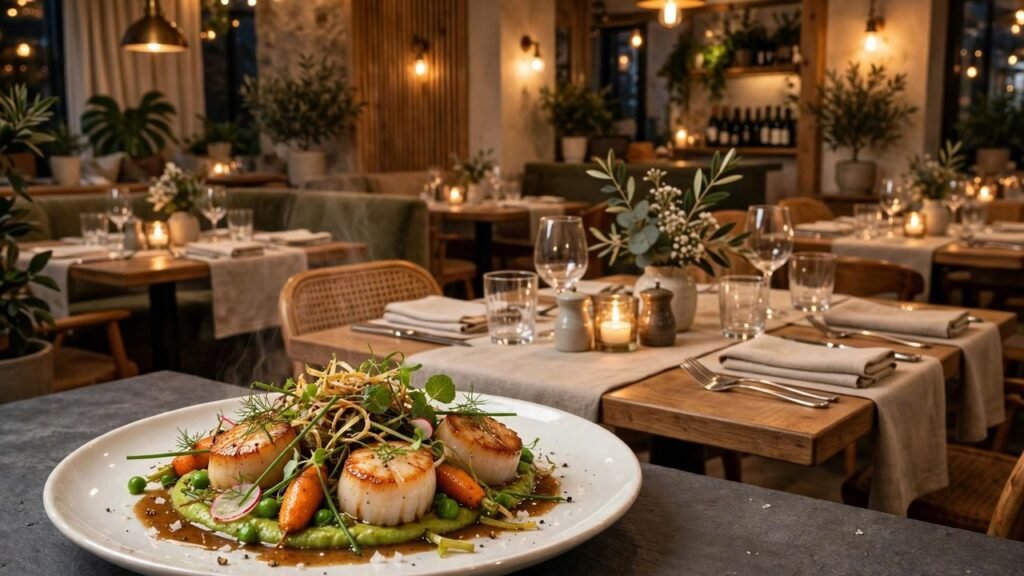
SEO for restaurants works when it does one thing: turn Google searches into booked tables. Around 72% of diners search online before choosing where to eat, and most decide within hours. So if your restaurant isn’t visible when someone searches “best Italian near me,” those covers go to a competitor.
Rankings alone don’t fill tables — the whole chain does: showing up in local results, looking irresistible in your listing, and making booking effortless. As a result, get one link wrong and it breaks. Here’s the chain, in plain English, with a 30-day plan you can actually do.
What SEO for Restaurants Really Means
Forget “getting to #1 on Google.” The real goal: when a hungry person nearby searches for food, your restaurant shows up, looks like the obvious choice, and gives them a one-tap way to book.
SEO for restaurants is mostly local SEO. Nearly every restaurant search is a geography question — “ramen near me,” “brunch in Shoreditch” — answered by the Map Pack: three restaurants on a map at the top. Three things decide it: distance from the searcher (out of your control), how well-known and well-reviewed you are, and how clearly your online presence matches the search. Two of those are up to you.
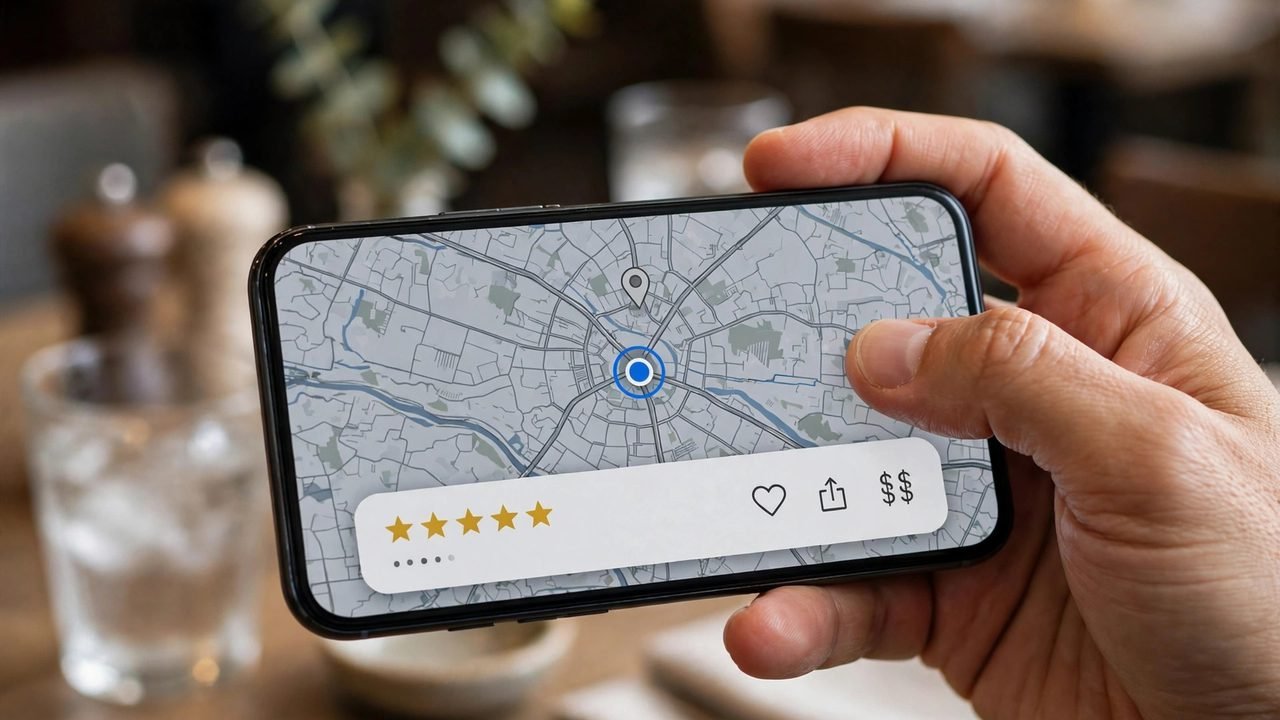
Your Google Business Profile Is Your Digital Menu Board
Your Google Business Profile — the listing with your hours, photos, and reviews — is your single highest-leverage online asset, seen far more than most restaurant websites. Treat it like a digital storefront, not a directory entry.
First of all, get this right: use your exact real business name (never stuff keywords into it — Google penalizes that), pick the most specific category (“Neapolitan Pizza Restaurant” beats “Restaurant”), keep your hours brutally accurate, and link straight to your menu and reservation page. And upload photos: real, well-lit shots of your actual dishes, dining room, and storefront — profiles with 100+ photos reportedly get several times more calls than average. Add fresh ones monthly.
If your profile hasn’t had a proper setup in the last year, our Google Business Profile optimization guide walks through the full checklist.
Reviews Are the New Word of Mouth
Reviews pull double duty: a direct Map Pack ranking signal and the first thing a diner reads. Google weighs quantity, star rating, recency, and whether you respond. A restaurant with 400 reviews at 4.3 stars outranks one with 40 at 4.9 — volume and freshness matter.
So build a simple system: ask every happy table (a QR card with the bill works brilliantly), answer every review within 48 hours — including the unfair ones, calmly — and never buy reviews or discount for them; that’s against Google’s rules. Full playbook: how to get more Google reviews safely.
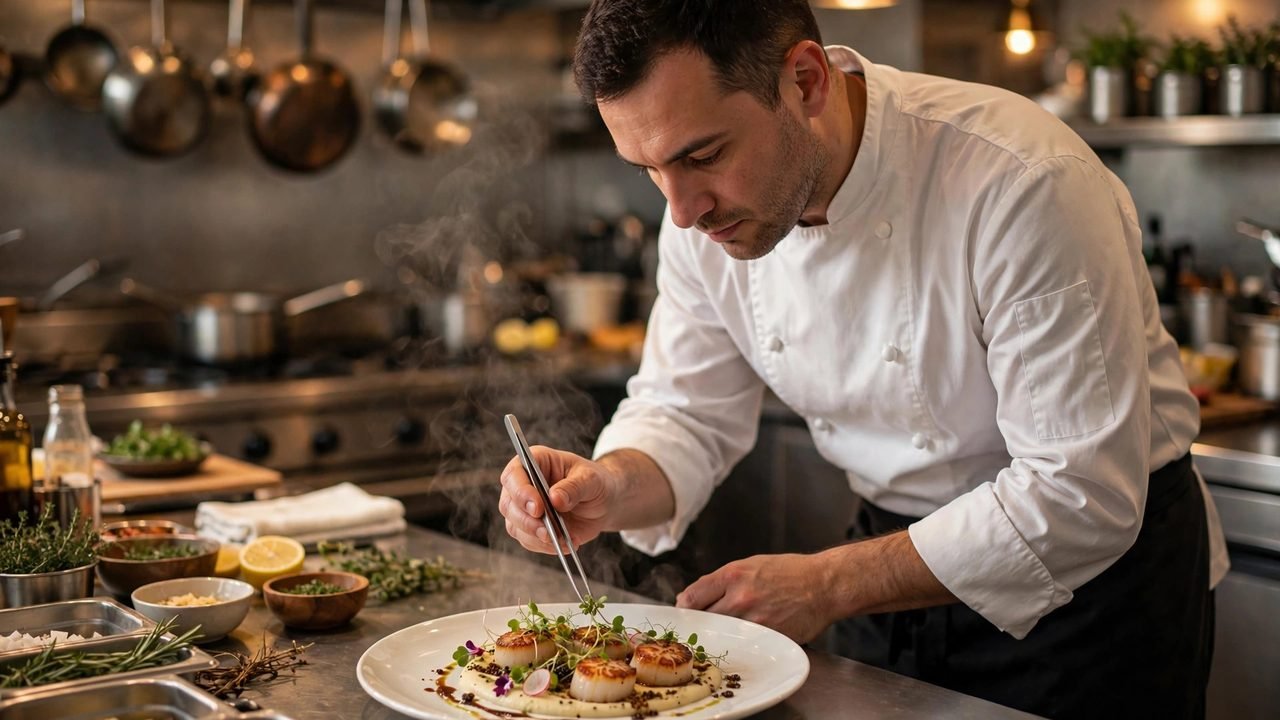
Put Your Menu on YOUR Website — Not Just Delivery Apps
This one costs restaurants real money. If your menu lives only on a delivery platform, Google sends hungry searchers there — and the platform takes 15–30% of every order. Therefore, your own site should carry your full menu as a proper HTML page (not a PDF), with prices, photos, and your own ordering link.
Then add structured data — behind-the-scenes code telling Google “this is a restaurant, these are our dishes, these are our hours.” Google’s local business structured data documentation covers the markup, and most restaurant themes have plugins that do it in clicks. That’s what lets Google show your menu and prices in the results — and what AI assistants quote when asked for a recommendation.
The Keywords That Actually Book Tables
Owners often chase broad keywords like “Italian restaurant.” The searches that book tables are specific: “best carbonara near me,” “gluten-free pizza Shoreditch,” “romantic restaurant open late.” Less competition, far higher intent — the searcher is already deciding.
Use the language your neighborhood actually uses — if locals say “the Northern Quarter,” your site should say Northern Quarter. Work your cuisine, dishes, neighborhood, and dietary options (vegan, halal, gluten-free) naturally into your homepage and menu copy. One page per location: a single “Locations” page listing five addresses won’t rank in any of the five neighborhoods.
The 2026 Twist: AI Assistants Recommend Restaurants Now
In 2026, Google’s AI Mode and AI Overviews answer restaurant questions conversationally — “romantic restaurant for date night near me” — often without a single click. Not scary for well-run restaurants: the AI recommends from your reviews, photos, menu data, and how clearly your site describes what you’re known for. Communicate your vibe, dietary options, and specialties clearly — structured data, detailed reviews, and real photos are your ticket in.
Keep your name, address, and phone number identical everywhere — inconsistencies quietly suppress rankings (Google’s business information help page covers the basics). Full directory rollout: our local citations guide.
Your 30-Day Action Plan
Week 1: Complete your Google Business Profile — right category, accurate hours, 20+ real photos, links to menu and booking. Week 2: Full menu on your website as an HTML page, add structured data, match phone and address to your profile. Week 3: Launch your review routine — QR cards at tables, respond within 48 hours. Week 4: Rewrite your homepage with cuisine, neighborhood, and dietary keywords; list on Yelp, TripAdvisor, and Apple Maps with identical details. Repeat monthly.
FAQs
Most restaurants see meaningful movement in 2–4 months, with the Map Pack responding fastest to profile fixes and new reviews. Profile and photo work can show results within weeks; website authority builds over months. Restaurants that only fix their profile and start collecting reviews usually see the quickest wins.
Most of it is doable in-house: profile setup, photos, reviews, and menu pages need your time, not an agency. Consider one only for multi-location businesses or technical work. Never pay for “guaranteed #1 rankings” — that’s a red flag in any local SEO engagement.
They don’t directly hurt rankings, but they can quietly cost you. Delivery platforms rank for your own restaurant’s name and take commission on every order. The fix: make sure your own website also ranks for your name and menu searches, so diners can order directly and you keep the full margin.
There’s no magic number — aim to consistently earn more than your direct competitors. A steady flow of 3–5 new reviews per month beats a one-time burst. Google weighs recency and your response rate alongside the rating, so keep the routine going.
No — for restaurants a blog is optional. Your money pages are your homepage, menu, location, and reservation pages. A blog only helps with genuinely useful local content, which most restaurants abandon within months. Do the profile, reviews, and menu first.
SEO for restaurants isn’t magic — it’s a routine: a complete profile, steady real reviews, your menu on your own website, and the keywords your diners actually type. Do it consistently and your tables stop depending on luck. That’s the point: not vanity rankings, but a dining room full on a Tuesday night.