
Here’s what an ecommerce SEO strategy 2026 actually looks like: make your category pages the best answer for what shoppers search, keep your product data identical everywhere Google looks, and earn the reviews and links that prove you’re a real shop. Do that consistently, and searches stop being window-shoppers and start being customers.
Most store owners do the opposite: they polish product pages nobody can find while ignoring the category pages that could rank. The fix isn’t an agency retainer — it’s six pillars, worked through in the right order.
Ecommerce SEO Strategy 2026: The Six Pillars
SEO for a store isn’t a one-time trick — it’s a system you build. That ecommerce SEO strategy 2026 breaks into six pillars: category pages, crawl-friendly architecture, consistent product data, reviews and buying guides, earned authority, and realistic measurement. Get all six working and they compound. (For product-page copywriting specifically, see our guide to product pages that rank.)
Start With Category Pages — They’re Your Money Pages
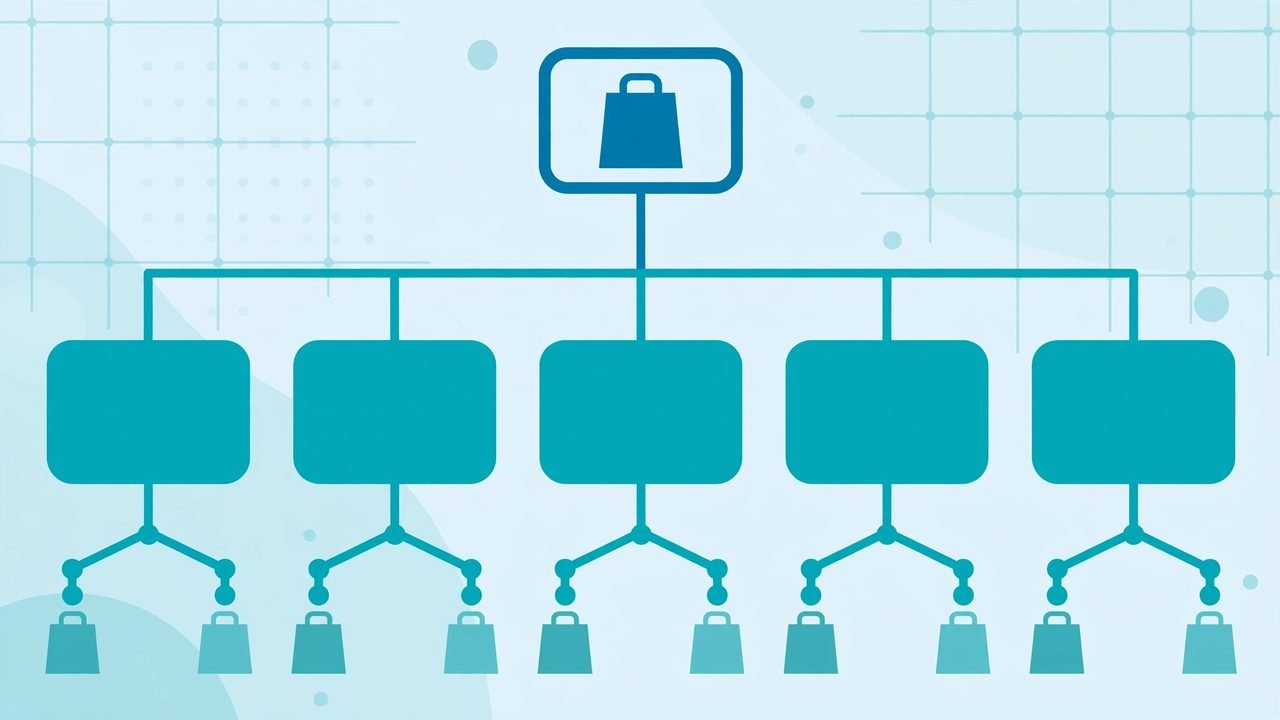
When someone Googles “leather tote bags”, do they want one specific bag — or a page of options? Almost always the latter. That’s why category pages outrank product pages for most shopping searches, and why they deserve your best work first.
Give every important category its own keyword — one term real customers type. Twenty minutes with free keyword research tools reveals whether shoppers search “men’s running shoes” or “mens trainers” (it matters enormously in the UK). Then write 80–150 honest, owner-voice words at the top: “Our totes are cut from full-grain hide in a Leeds workshop, guaranteed for ten years.” That beats every supplier-pasted paragraph your competitors use.
Make Your Site Easy for Google to Crawl
Google budgets how many pages it’ll crawl — irrelevant for a fifty-page store, decisive for a 5,000-product one with filters spawning a million URLs. Three fixes cover most of it: keep architecture flat (everything within three clicks of home); let Google index only filter combos people actually search for (“black leather tote”), noindexing the rest; and handle out-of-stock properly — keep the page live with an availability alert if it’s returning, 301 it to the closest alternative if it’s gone for good.
Keep Your Product Data Identical Everywhere
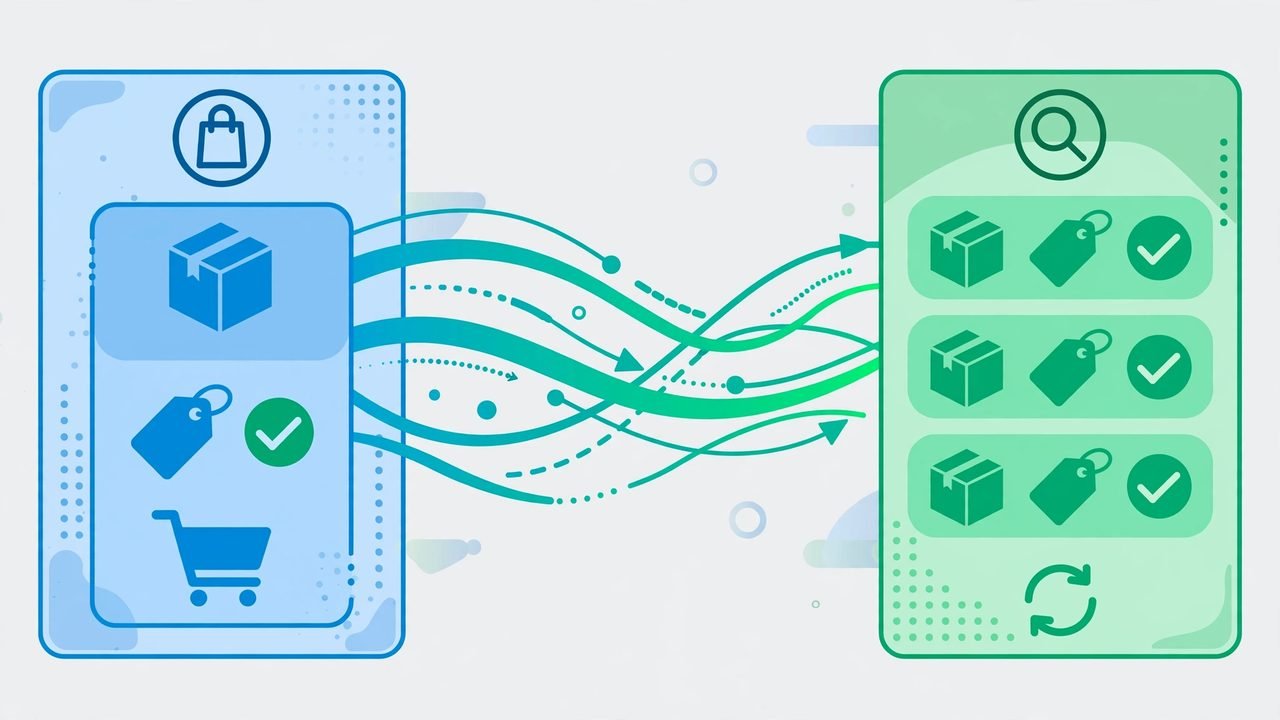
Google reads your site, your structured data, your Merchant Center feed and your reviews — then cross-checks them. One price on the page and another in the feed tells Google not to trust you. In 2026, consistency is the ranking factor nobody talks about.
The fix: Product schema on every product page matching what’s visible, a Merchant Center feed with identical prices, stock and GTINs, plus return and shipping markup. Google’s own guide to sharing product data is the closest thing to an official answer key. Update in one place; let your platform push the same truth everywhere.
Reviews and Buying Guides: Your Free Sales Team
Nobody trusts a store with zero reviews. They’re social proof, fresh content and star ratings — three wins from one habit. Automate it: one email a week after delivery, one clear link, no bribe, sent to everyone.
Then write one buying guide per major category — “how to choose the right tote bag”, linked to your bestsellers. It ranks for research searches, answers your support inbox’s greatest hits, and funnels readers to products (see our guide to content clusters for the structure). A short FAQ block on category pages wins “People also ask” spots and gives AI answers quotable chunks.
Earn Links a Real Store Deserves
Blunt truth: “500 backlinks for $50” emails deserve the bin — link packages get stores penalised, not rich. Instead: ask suppliers for stockist links (you sell their products, so it’s natural); pitch “best X for Y” roundups with a specific angle; set a Google Alert for unlinked brand mentions and ask for the link; and publish one original-data story a year. One good story beats a hundred directory submissions.
What to Expect: Honest Timelines and the AI Layer
AI Overviews and AI Mode now sit above regular links for many shopping queries. Google says no special tricks get you in — fundamentals win — but being correct, clear and quotable matters more than ever: real prices, real materials, real answers. No ecommerce SEO strategy 2026 is complete without that mindset. Check Search Console’s Generative AI reports (launched June 2026) monthly, and read Shopify’s 2026 SEO tips for store owners alongside this.
Expect visible movement in three to four months and meaningful revenue impact in six to twelve. Measure organic revenue and conversion rate, not vanity rankings — a number-one ranking that sells nothing is a participation trophy.

An ecommerce SEO strategy in 2026 is a plan for getting an online store found on Google: category pages built around real search terms, a crawl-friendly site structure, product data that matches everywhere, customer reviews, and earned links. It also means writing content clear enough for AI Overviews to quote.
Start with category pages. Category pages match how most shoppers search — they want options, not one item — so they rank for the high-volume terms. Optimise product pages next for the specific, ready-to-buy searches. A store with strong categories and weak product pages still sells; the reverse rarely does.
Most small stores see ranking movement within 3–4 months and meaningful revenue impact within 6–12 months. Competitive niches take longer. Quick technical fixes — indexing issues, duplicate filter URLs, missing schema — can move the needle in weeks, but sustainable growth is a compounding game, not a switch.
Yes — they do different jobs. SEO earns you organic listings; Merchant Center powers free product listings, the Shopping tab and price visibility across Google. More importantly, Google cross-checks your feed against your site, so a consistent feed actively supports your SEO. Set it up even if you never run a paid ad.
Many small stores handle the fundamentals themselves for the cost of their time plus a few free tools. If you hire help, expect honest pricing tied to deliverables — audits, content, technical fixes — never “guaranteed #1 rankings”. Anyone promising a specific ranking is selling something Google explicitly says nobody can guarantee.
In short: pick your categories, fix your structure, sync your data, collect reviews, earn real links, and give it time. That’s the whole strategy — no hacks, no magic, just a store Google trusts and shoppers love. Start with the category page that would make you the most money, and work down the list from there.